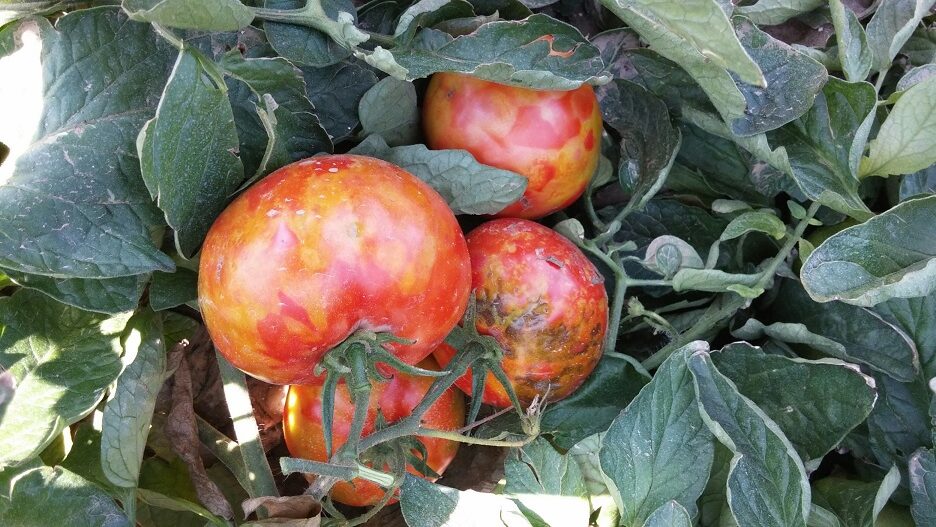
The Tomato Brown Rugose Fruit Virus, a new member of the Tobamovirus group which has originated in Africa and the Middle East in 2014, poses a constant threat to growers worldwide, as it is highly infectious. ToBRFV significantly reduces yield, affects the quality of fruit, and systematically infects other plants. ToBRFV foliar symptoms include mild and severe mosaic with occasional leaf narrowing. Tomato fruits may exhibit yellow spotting and brown rugose marks resulting in poor fruit quality. Tobamo viruses are very stable and can survive for long periods in infected crop debris, in soil or on contaminated surfaces. Spread of the virus can occur very readily through seed transmission and by mechanical transfer, especially in protected or high input culture systems where plants are pruned, staked, handled or touched frequently. In open field productions machinery used for cultivation or weed control can spread the virus and there are some reports that tobamo viruses can spread in irrigation water. The possible role of seed in the dissemination of the virus is currently not well characterized. An additional factor to consider are humans handling tomato plants / fruits – as the virus is very stable, soap will for e.g. not help destroy the virus so contamination can readily occur.





 ">
">